Digital Marketing: Turning Ideas Into Meaningful Growth
Digital marketing has become one of the most important ways for businesses to connect with people in today’s connected world. From a small local business to a growing online brand, having a strong digital presence can make it easier to reach the right audience, communicate a clear message, and build lasting relationships with customers. Unlike traditional marketing, digital marketing allows businesses to interact with their audience through multiple online channels and understand how people respond to their campaigns.
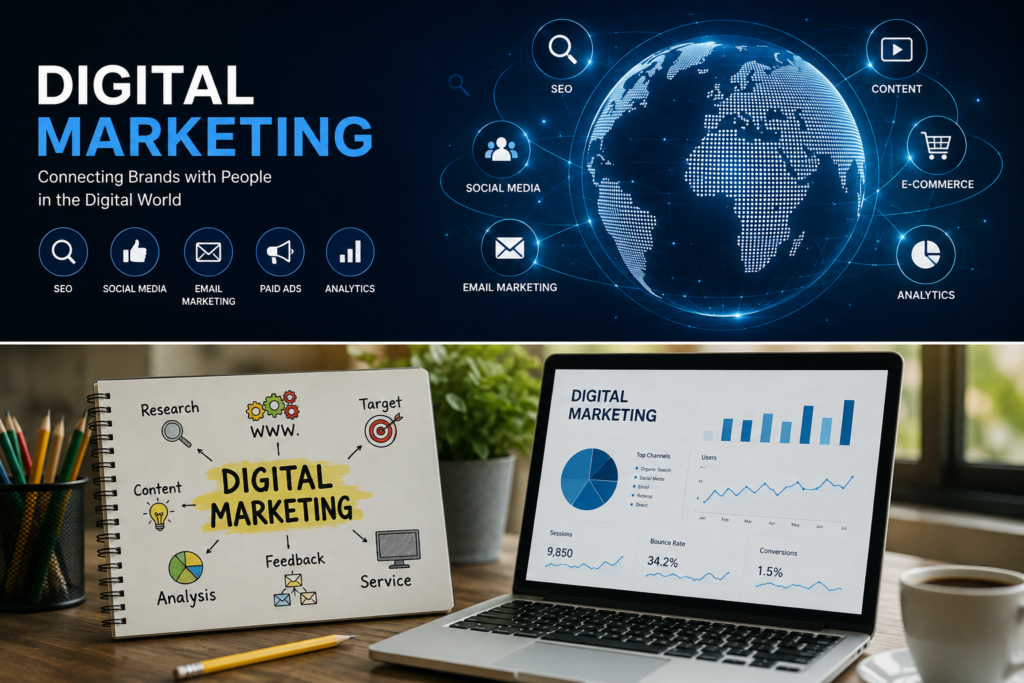
What Is Digital Marketing?
Digital marketing refers to the promotion of products, services, brands, or ideas through digital channels. These channels can include search engines, social media platforms, websites, email, online advertising, and other internet-based platforms. The main purpose is not simply to make people aware of a brand, but to attract relevant audiences, create interest, encourage action, and eventually turn visitors into customers.
A successful digital marketing strategy usually combines several techniques instead of depending on a single platform. The right combination depends on the business, its target audience, objectives, budget, and industry.
Why Is Digital Marketing Important?
People spend a significant part of their daily lives online, whether they are searching for information, watching videos, comparing products, reading reviews, or communicating on social media. This creates an opportunity for businesses to reach potential customers at different stages of their decision-making process.
Digital marketing also provides something that traditional marketing often cannot offer at the same level: measurable performance. Businesses can monitor website visits, engagement, clicks, leads, conversions, and other indicators to understand what is working and where improvements are needed. This makes marketing more data-driven and allows campaigns to evolve based on actual audience behaviour.
Search Engine Optimization
Search Engine Optimization, commonly known as SEO, focuses on improving a website’s visibility in search engine results. When people search for information, products, or services, businesses want their websites to appear for relevant searches.
SEO involves several areas, including useful content, keyword research, website structure, technical performance, internal linking, and creating a good experience for visitors. The goal should not be to fill a webpage with keywords. Instead, businesses should create genuinely useful content that answers the questions their audience is searching for.
Social Media Marketing
Social media marketing has changed the way brands communicate with their audiences. Platforms such as Instagram, Facebook, LinkedIn, and other social networks allow businesses to share content, build communities, showcase products, and communicate directly with potential customers.
Effective social media marketing is about more than posting frequently. Brands need to understand what their audience cares about and create content that provides value, entertainment, information, or inspiration. Consistency in messaging and visual identity can also help a brand become more recognizable over time.
Content Marketing
Content is at the centre of many successful digital marketing strategies. Blog articles, videos, social media posts, infographics, guides, newsletters, and other forms of content can help a brand demonstrate knowledge and build trust.
Good content starts with understanding the audience. Instead of creating content simply because a business wants to promote something, marketers should ask what information their audience actually needs. Helpful content can attract people naturally and create opportunities for them to discover a brand before they are ready to make a purchase.
Paid Digital Advertising
Organic marketing can take time, which is why businesses often use paid advertising to reach specific audiences more quickly. Platforms such as Meta Ads and Google Ads allow marketers to create campaigns based on factors such as interests, search behaviour, demographics, location, and previous interactions.
The effectiveness of an advertisement depends on more than the amount of money spent. The creative, headline, offer, audience, landing page, and overall message all influence performance. Testing different versions of an advertisement can help marketers discover which combinations connect best with their target audience.
The Role of Data and Analytics
One of the biggest advantages of digital marketing is the amount of information that can be collected from campaigns and websites. Analytics can help marketers understand where visitors are coming from, which content attracts attention, how users interact with a website, and where potential customers leave the buying journey.
These insights can be used to improve future campaigns. Instead of relying entirely on assumptions, marketers can make decisions based on measurable behaviour. However, data should always be interpreted in context because a single metric rarely tells the complete story.
Building a Digital Marketing Strategy
A strong digital marketing strategy begins with a clear objective. A business might want to increase brand awareness, generate leads, drive website traffic, increase online sales, or build a loyal customer base. Once the objective is established, the next step is identifying the target audience and understanding their needs, problems, interests, and online behaviour.
The business can then choose appropriate channels, develop content, create campaigns, establish measurable goals, and monitor performance. Digital marketing should be treated as an ongoing process rather than a one-time activity. Campaigns can be tested, analyzed, adjusted, and improved as new information becomes available.
The Future of Digital Marketing
Digital marketing continues to evolve as technology and consumer behaviour change. Artificial intelligence, automation, personalization, short-form video, conversational experiences, and new forms of online content are influencing how brands communicate with audiences.
However, technology alone cannot create a successful marketing strategy. Understanding people remains at the heart of marketing. Businesses that combine useful technology with creativity, authenticity, strong communication, and a genuine understanding of their audience are more likely to create meaningful digital experiences.
Conclusion
Digital marketing is much more than advertising a product on the internet. It is a combination of strategy, creativity, communication, technology, and data. From SEO and social media to content marketing and paid advertising, each channel can contribute to a larger digital presence when used with a clear purpose.
For anyone learning digital marketing, the most valuable approach is to keep experimenting, studying audience behaviour, analyzing results, and adapting to change. The digital landscape will continue to evolve, but the fundamental goal remains the same: connect the right message with the right people at the right time.